
CES and AI - Spoiler Alert, It’s Buzzing
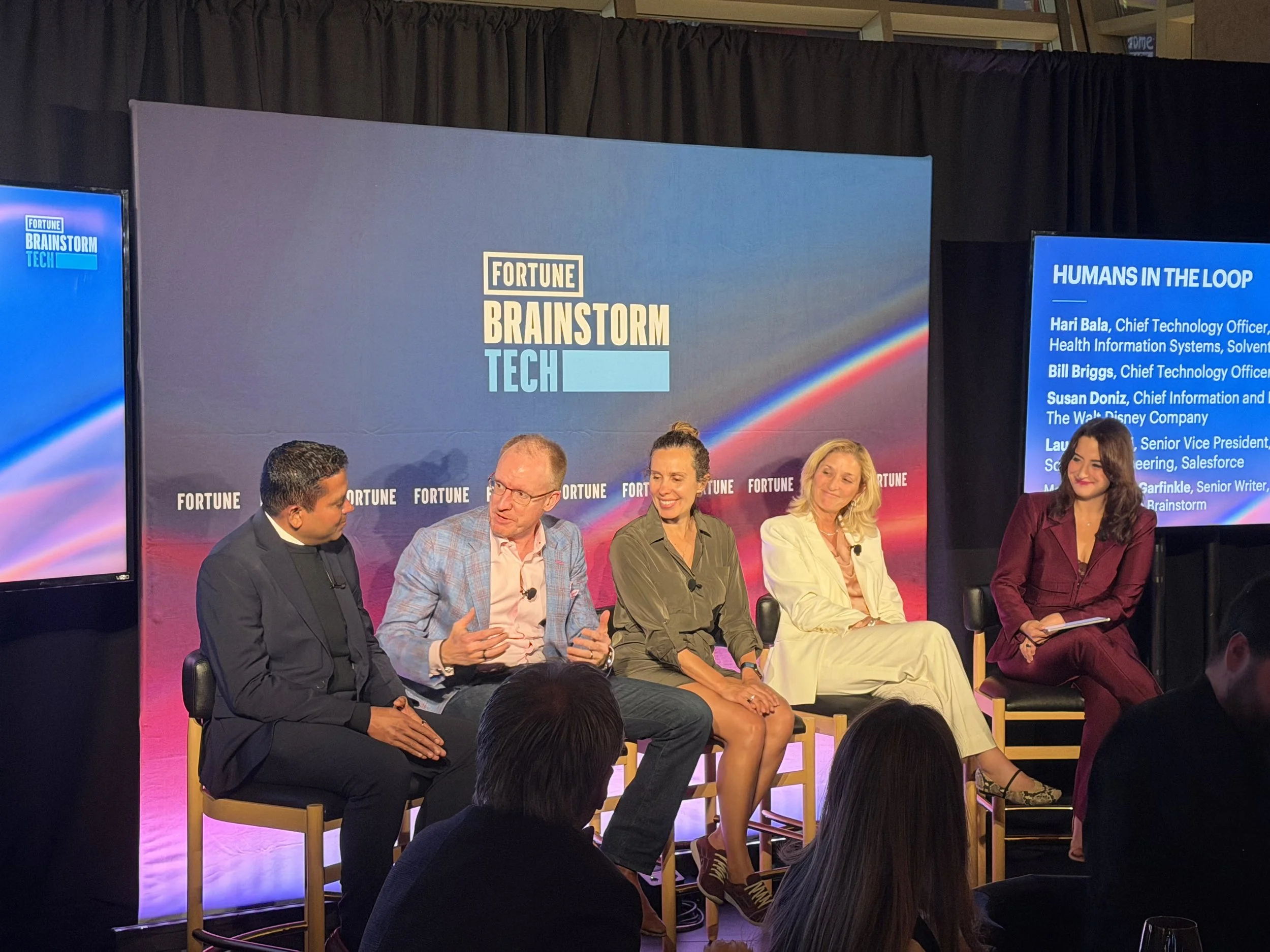
It is Day 2 at CES and, as expected, AI has been showing center stage across every panel, every hall and most after-hour conversations. We can all agree that AI has officially moved from fascination to execution. The conversations are not about what AI could do anymore; instead, they are about what it takes to make it work inside real organizations.
A few takeaways from my brief time in Vegas on ways leaders are thinking about AI right now:
1. AI Does Not Fix Broken Processes
I kicked off my time in Vegas at Fortune Magazine’s Tech Brainstorm dinner, where a panel of tech executives dug into AI and operations. One theme was clear: automating outdated or overly complex systems just scales inefficiency.
The smartest companies are using AI as a forcing function to simplify - removing steps, redesigning workflows and rethinking outcomes before deploying technology.
2. Incremental Thinking Has a Ceiling
Small experiments matter, but meaningful value comes when organizations work backward from business outcomes. The real gains are showing up in less glamorous or sexy areas, like finance, procurement, supply chain or operations, not just customer-facing demos. Sorry, marketers!
3. Marketing & PR Are Being Rewired (Not Replaced)
That said, AI is accelerating content creation, monitoring and insights. The winning brands are using it to create clarity, not noise.
When everyone can generate content, differentiation comes from strategy, message discipline and a unique point of view. AI can scale execution, but it cannot replace brand judgment, credibility or relationships, especially in earned media, where trust still drives impact.
The smartest teams are using AI with guardrails: to move faster, uncover insights and sharpen storytelling, while keeping humans responsible for tone, accuracy and context.
4. Data Is Still the Foundation
As a former financial analyst, I still love when conversations go back to data. We know that AI is only as strong as the data beneath it. Secure, well-orchestrated, ethical data is not optional but is the prerequisite. That said, waiting for “perfect” data also creates paralysis. Progress comes from starting with focused use cases and building momentum.
5. Governance and Humans in the Loop Matter More Than Ever
Trust is everything, especially in regulated industries like healthcare, food production or education. Successful AI systems include auditability, clear oversight and human expertise embedded throughout the process, not bolted on at the end.
6. Leadership and Culture Are the Real Differentiators
AI adoption is not just a tech challenge but also a leadership one. Organizations that move the fastest have leaders willing to create urgency, empower teams and start where energy already exists instead of forcing top-down mandates.
6. AI Is Augmenting Work, Not Replacing
Across industries, the most compelling applications are not about cutting jobs but about eliminating the most tedious work and innovating faster. From engineers to clinicians, AI is creating space for people to focus on what humans do best.
The Bottom Line
CES reinforced a familiar truth: the biggest risk is not moving too fast but standing still while waiting for the next version.
The companies that win will not chase hype. They will do the challenging work: simplifying systems, investing in people and building change, because AI is not the strategy. It is the accelerator.