Starbucks Partners With TikTok to Leverage Employee-Generated Content
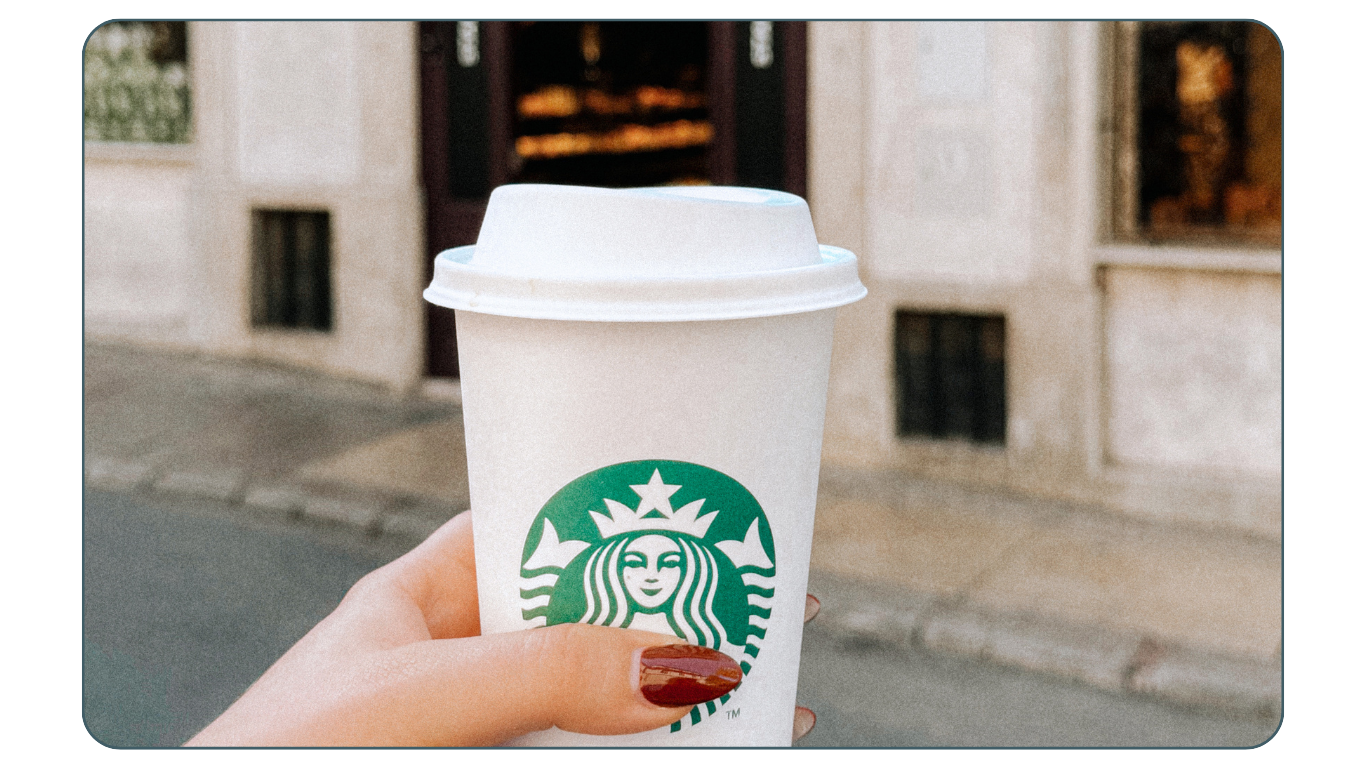
Starbucks finally realized that its best marketers just might be standing behind the register. And we'd argue the same may be true for most brands.
During this year’s Cannes Lions Festival of Creativity, Starbucks announced a new partnership with TikTok's Creator Networks, making it the first brand to leverage the tool within TikTok's Content Suite. Through Creator Networks, employees can access creative briefs, production tools and earn a cut of ad revenue for content they make on shift.
This is the first brand to pilot a custom creator network on TikTok, built on Starbucks' existing Green Apron Creators program. But we don't anticipate it'll be the last, as brands across every platform scramble to determine the best strategy for meaningfully leveraging employee-generated content.
Brand Visibility Has Shifted
As AI-generated content floods our feeds and search results, genuinely human connection gets rarer and more valuable by the day. And it's not only a social dynamic. Answer engines like ChatGPT, Perplexity and Google's AI Overviews increasingly surface creator accounts over brand pages because the models weigh first-person expertise and verifiable authorship more heavily than a corporate account. As a result, brands with no human voices in their ecosystem are losing real estate on social media and risk becoming relatively invisible in the places people now go to ask questions.
The idea that brands only need to worry about their direct competition is outdated. They're competing with Netflix, Spotify, podcasts, and every creator on TikTok, YouTube and Instagram. The only way to stay in that fight without an infinite paid budget is to own your content, and one of the fastest paths there runs through the people already on payroll.
Consumer Trust in Polished Brand Content Continues to Slide
Despite the changing landscape, trust in actual humans, even ones we've never met, holds steady. Employee content slots into that gap in a way no media buy can touch, because you can't manufacture someone genuinely loving what they do.
Starbucks already has employee advocates organically going viral on TikTok. Josiah, a barista posting as @itsjoboi, built 1.7 million followers and 51 million likes filming drinks behind the counter. Starbucks eventually named him a Global Coffee Creator. Over at Staples, 22-year-old print specialist Kaeden Rowland — you may know her as Staples Baddie — started making TikToks about services most people never knew the store offered. Her videos cleared 6 million views, and Staples watched store traffic climb. The company eventually gave her an affiliate link and a seat on an advisory board.
A competitor can outspend you, but they can't replicate your barista.
It's Not Just TikTok
LinkedIn made a parallel move this month, launching its Creator Marketplace inside Campaign Manager — a tool that lets brands find vetted creators, surface employees and partners already talking about them, and amplify that content directly. The throughline is the same on both platforms: company pages have hit a reach ceiling, and individual voices are what travel. On LinkedIn, employee networks are on average roughly 12 times larger than a brand's own following, and personal profiles consistently outperform company pages on engagement. Collaborative Posts, also announced at Cannes, add another lever: multiple authors can co-create and publish a single post, giving teams that build the habit a structural reach advantage.
The Risks Are Real
Posting on the clock, brand-safety missteps and fair compensation are the usual concerns when employees create content informally. A program like Creator Networks addresses each: briefs keep content aligned with brand priorities, revenue sharing compensates employees transparently rather than relying on unpaid goodwill, and the brand retains a degree of creative oversight without flattening the authenticity that makes the content work in the first place. The alternative — ignoring or suppressing it — doesn't make the content stop. It just means it happens without you, or worse, an employee posts a viral video and you fire them, risking damage to consumer perception.
The Takeaway
The Starbucks move is a decision about brand architecture: who carries the brand's voice, how they're rewarded for it, and how that voice travels across social, search and AI at the same time. The brands treating that as a question worth answering now are the ones who'll own the next era of attention.