The One Mistake That Can Kill a Great Product Launch
It happens every year.
Brands spend months - or years - developing a great product. One that's going to set them apart, challenge the status quo, take market share away, and so on.
Millions of dollars go into research, innovation, packaging, manufacturing, testing, inventory, distribution. And then they get to the marketing budget and realize: there’s barely anything left to actually tell people about it! As many companies are finalizing their 2027 budgets right now, this is one preventable mistake I would encourage brands not to make. Whether you’re a new brand entering the market, an international brand expanding into the U.S., or an established company preparing to launch a new product, building the product is only half the job. The other half is building the demand for it.
You can create the best product in your category, but if your customers don’t know it exists, understand why it matters or trust it enough to try it, being “the best” won’t matter much.
Great products don’t automatically create great launches.
One of the biggest misconceptions we see at Crowe Media is the assumption that once a product is available, awareness will somehow follow. It rarely works that way.
Retail placement is amazing and yet it doesn’t automatically create demand. In fact, retailers are looking to you to make it fly off the shelves. A beautiful website doesn’t automatically create traffic. It's rarely the first discovery tool. A few social posts don’t create awareness or momentum. And launching a product doesn’t mean customers will suddenly start looking for it. You have to give people a reason to discover it, talk about it, trust it and ultimately buy it. And love it or hate it, that requires investment. And while I do appreciate clever advertising, this investment is far from staying in that lane.
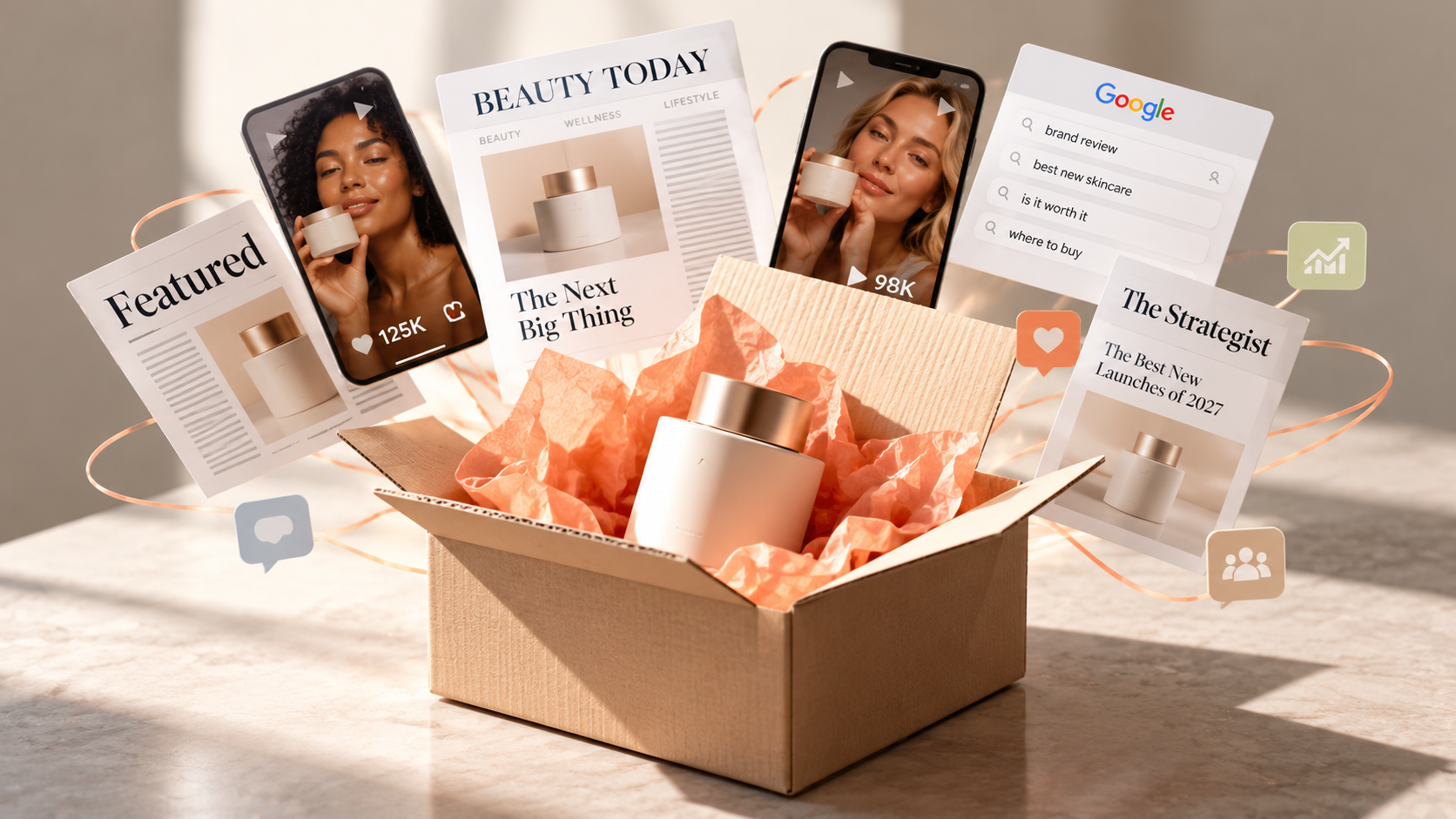
It means investing in the entire ecosystem around the product: PR, creators and influencers, social content, founder and executive storytelling, events and experiences, community, partnerships, search and increasingly, visibility within AI-driven discovery. Because the way people discover brands has fundamentally changed. And continues to do so nearly every day.
For instance, your customer might first encounter your product via a TikTok video. Great! Step one. They may Google it or ask Chat about it if another video doesn't hold their attention. If you've done some PR, they may read an article about it. Check Reddit. See what creators are saying - social platforms may serve up similar content to them. That customer may go through 10 other steps - if they haven't lost interest - before they decide to buy from you.
Your launch budget needs to support that journey.
What happens when it doesn’t?
When brands underfund the go-to-market side, the consequences compound. Awareness is lower than projected. Retail velocity is slower. Inventory sits ... and compounds, costing you more.
Customer acquisition becomes more expensive because you’re trying to manufacture demand after the fact. Retailers become less enthusiastic because the product isn’t moving and your product orders decrease. The sales team needs to work harder without enough air cover. And eventually, leadership starts questioning the product itself. Was the product wrong - or did enough people simply never know about it? That is an expensive question to have to ask. And perhaps the biggest missed opportunity is time.
You may have spent a year developing something incredible only to give it a few weeks and an underfunded campaign to prove itself. Marketing shouldn’t be what’s left over. Marketing, communications and demand generation should be part of the product-launch conversation from the beginning.
If you’re finalizing your 2027 budget, don’t just ask: How much will it cost us to make this?
Ask: What will it take to make people care? What will it take to create awareness? What will it take to build trust? What will it take to earn third-party validation?
What will it take to create enough repetition that someone remembers your name when they’re finally ready to buy? And what will it take to sustain that momentum beyond launch week? In today's attention economy, launching isn’t the finish line. It’s when the real work begins.
You did all that work to create something worth buying. Make sure you leave enough in the budget to make it worth discovering.
